Foraging for Carrageen Moss Along the Wicklow Shore
in by Oisin Healy in Food and Outdoors
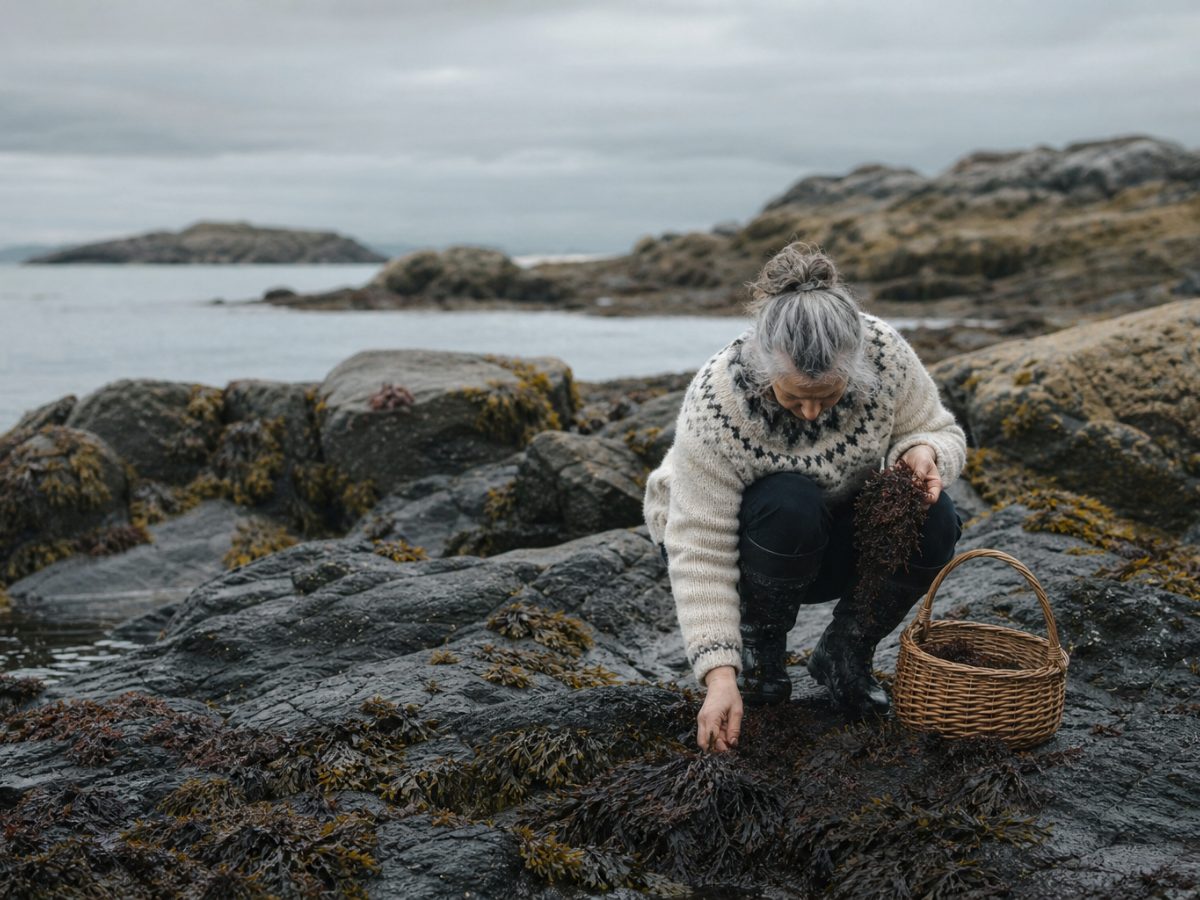
I found my first proper haul of carrageen moss by accident. I was picking my way along the rocks somewhere between Arklow and Mizen Head on a low spring tide, trying not to slip, when I noticed the pools were thick with something dark and purplish-red, almost like wet leather. I'd seen it in health food shops, dried and pale, and I'd used it in recipes without ever connecting it to this stuff clinging to the rocks in front of me. That was a few years ago now, and I've been going back every season since.
Where to look along the Wicklow coast
Carrageen moss (Chondrus crispus, if you want the proper name, though nobody uses it) grows on the mid to lower shore, on exposed rock faces and in gullies that get a good wash of clean Atlantic water. Along the Wicklow coast, the stretch around Brittas Bay is reliable, particularly where the rocks give way south of the beach access points. The area around Jack's Hole and the rocks below Mizen Head are worth a look too. Anywhere you find bedrock shelves that slope gently into the sea, with no obvious pollution nearby, you have a reasonable chance of finding it.
It's fan-shaped, branching like a small flattened tree, and it ranges from dark greenish-brown to deep purple depending on how much sun it gets. When you hold a frond up to the light it goes almost translucent at the edges. You'll often find it mixed in with other seaweeds, particularly bladderwrack, so take a moment to identify it properly before you start harvesting.
Timing the tide
You need a low spring tide, the kind that happens around new and full moons. Anything less and the best growth stays submerged. Check a tide table for Arklow specifically rather than a generic Irish one, because there's a noticeable difference between local times and what a national chart will show you. Arrive about an hour before low water and you'll have a good two-hour window before the sea starts taking it back.
Bring a small scissors and a bag. Cut the fronds rather than pulling them, leaving the base attached to the rock so it grows back. Take no more than a third from any one patch. That's not just good manners, it's how you make sure there's something to come back to.
Rinse it well in fresh water when you get home. Spread it out on a tray or an old towel and leave it in a sunny spot to dry. It will go lighter in colour as it dries, eventually turning almost cream or pale grey. That's when you know it's ready to store in a jar.
Two things to make with it
The simplest use is a carrageen pudding. Rinse a small handful of dried moss, put it in a pot with about half a litre of whole milk, add a strip of lemon zest and a teaspoon of sugar, and simmer gently for about twenty minutes, stirring now and then. Strain it into a bowl or small moulds and leave to set in the fridge. It's mild, slightly coastal in flavour, and sets to something between a panna cotta and a blancmange. Good with a spoon of jam or just on its own.
The second thing is a carrageen gel for soothing skin, which sounds more complicated than it is. Simmer a small amount in water for fifteen minutes, strain it, and keep the liquid. It sets lightly when cold. People here have used it for generations on chapped or dry skin, and there's something satisfying about making it from something you pulled off the rocks yourself.
If you're new to the area and looking for other ways to get out on the coast, the Arklow Sea Breeze Festival is a good introduction to how this stretch of coastline is used and celebrated through the year. But honestly, a low tide and a pair of old trainers will take you a long way on their own.