What Native Plants Actually Survive a Front Garden Facing Wicklow Bay
in by Oisin Healy in Home and Garden
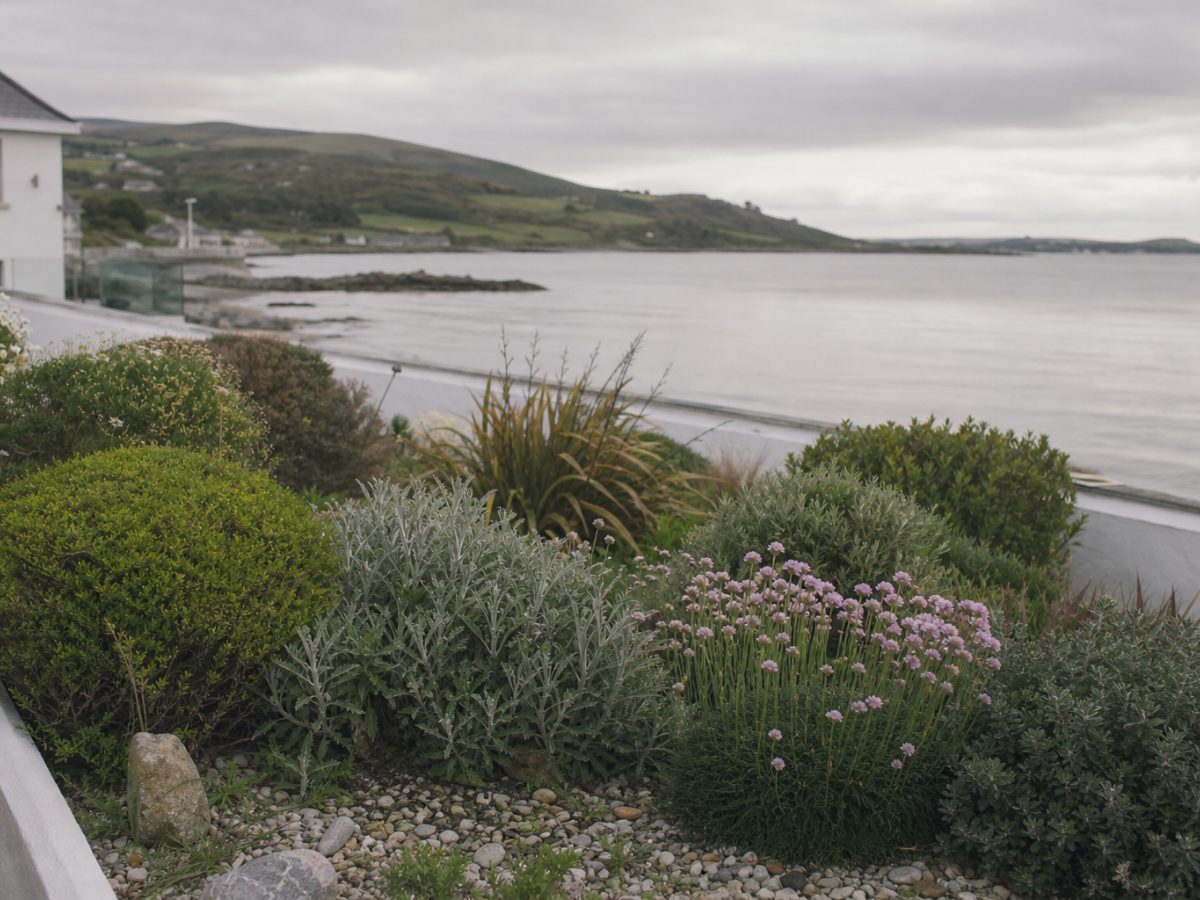
A front garden facing Wicklow Bay looks beautiful on paper. Open sky, light off the water, the kind of view people move here for. The reality is that anything you plant there is going to take a battering. Salt-laden wind off the Irish Sea, sandy or stony soil that drains almost too well, and the kind of easterly gusts in winter that flatten whatever wasn't already struggling. If you've tried to grow what works in an inland garden and watched it brown off by November, you're not doing anything wrong. You're just working against the conditions rather than with them.
The good news is that native Irish plants, the ones that have been here long before anyone was landscaping anything, are often surprisingly well suited to exactly this kind of exposure. The trick is knowing which ones actually cope with the front-facing east-coast situation rather than just tolerating mild coastal proximity.
Plants that genuinely hold their own
- Sea thrift (Armeria maritima). You'll see it growing out of cliff faces and rocky headlands along the Wicklow coast. It forms low, dense cushions of grass-like leaves and produces those pink pompom flowers in late spring. It needs almost nothing from you and laughs at salt spray. It's particularly good at the edge of a front path where the soil is thinnest.
- Marram grass (Ammophila arenaria). More dramatic in height and texture, and genuinely designed for sandy, exposed ground. It binds soil, tolerates the worst of the wind, and gives movement to a planting scheme without requiring any maintenance. It can spread, so give it space rather than tucking it in between other plants.
- Gorse (Ulex europaeus). Tough, spiny, evergreen, and covered in yellow flowers from late winter onwards. A single gorse bush in a front corner acts as a windbreak for everything else. It smells faintly of coconut on warm days, which is a small but genuine pleasure. Prune it after flowering and it stays manageable.
- Heather (Calluna vulgaris). Does well in the thin, acidic, sandy soils you often find close to the shore. Low maintenance once established, provides late summer and autumn colour, and handles dry spells reasonably well. Mix varieties to extend the flowering season.
- Wild privet (Ligustrum vulgare). Often overlooked because it doesn't feel exciting, but it's one of the better hedging options for an exposed coastal plot. It provides structure, tolerates salt and wind, and gives you something to work with as a backdrop to lower planting.
- Sea campion (Silene uniflora). Another cliff-dweller that works at ground level in the garden. White flowers, grey-green leaves, low-growing. It softens edges without being fussy and self-seeds gently if conditions suit it.
A few things that actually help
Soil improvement matters more than plant choice in many cases. Sandy coastal soil drains so fast that plants dry out before they're established. Work in some compost when planting, but don't overdo it. You're trying to help retention, not turn the whole bed into rich garden soil, because the plants that thrive here are adapted to lean conditions.
Timing your planting in autumn gives roots time to settle before the worst of the easterlies arrive. And if you're losing structures like fencing or trellis that you've planted against, it's worth reading about why garden fences fail so quickly near the sea, because replacing a support structure through the middle of an established planting is a miserable job.
Start with two or three of these species rather than trying to do everything at once. See what takes to your specific patch. The ground twenty metres from the shore behaves differently from the ground fifty metres back, and no list can fully account for that.